
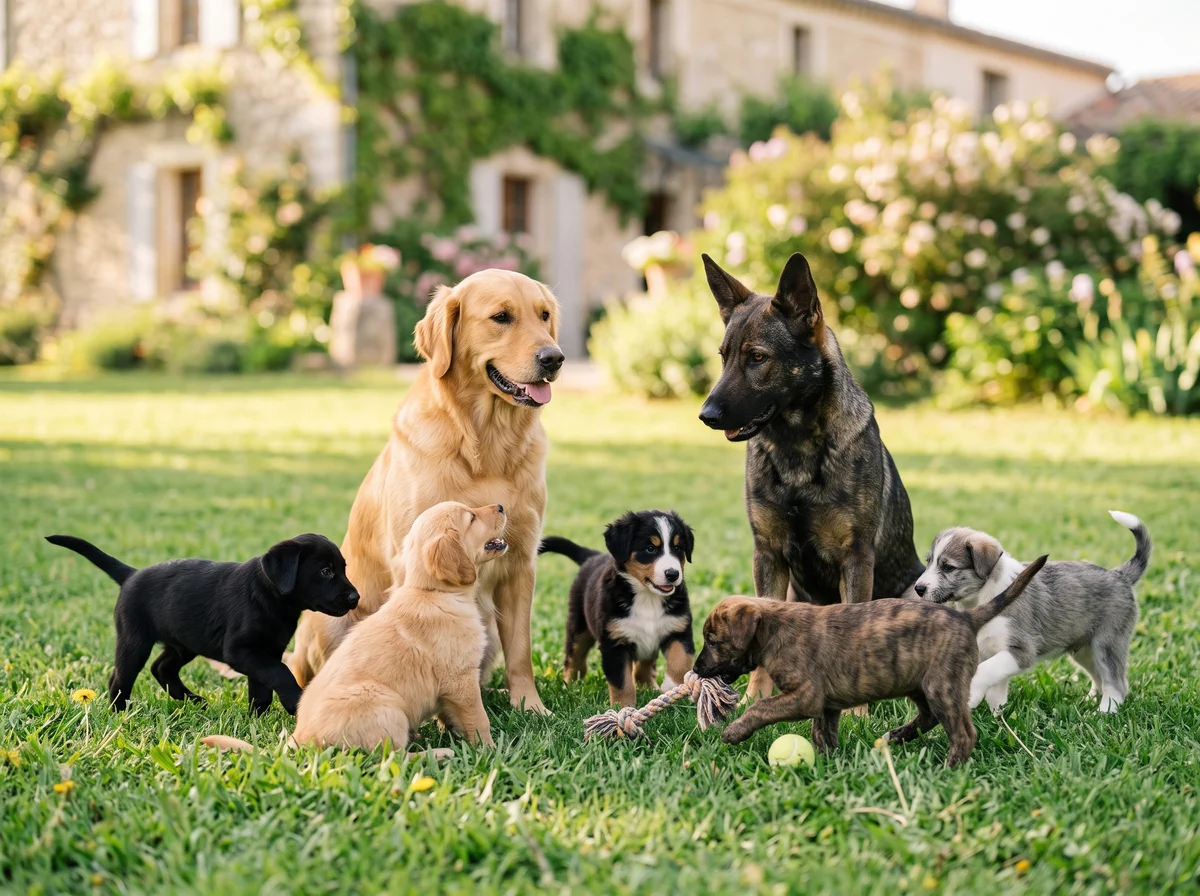
Can You Predict a Puppy's Looks and Personality?
Before a litter is born, one question always comes up: what will the puppies look like, and how will they behave?
Genetics gives you real clues. Coat color, size, and even parts of temperament follow known patterns. But every puppy keeps a bit of mystery. Here's what you can actually predict, and what still comes down to chance.
How Heredity Shapes a Puppy
Every litter tells a genetic story. Parents pass down a rich inheritance, yet nothing copies over exactly. Grasping these rules helps breeders make smarter choices and anticipate part of what a litter will bring, well before the pups are born.
• The Role of the Parents' Genes
It all starts with the two parents. Each one hands down half of a puppy's genetic makeup. That blend largely sets the future build and abilities of the animal. Sire and dam carry equal weight here. Their genes mix, react to each other, and sometimes cancel out. The same pair can still produce pups that differ widely from one another.
Researchers back this up: genetics draws the outline, without writing the full script. A strong pairing rests on real knowledge of the bloodlines. That skill sits at the heart of serious breeding, a topic we cover in our guide to becoming a dog breeder in Europe.
Studying the ancestors across several generations stays the best way to read a puppy's potential before the mating even happens.
• Dominant vs. Recessive Traits
Here sits the core of the topic. Every gene comes in two versions, one from the father, one from the mother. Some versions take over: we call them dominant. Others stay hidden, unless they meet a matching copy. Those are the recessive versions.
A clear example helps. A short coat often dominates a long one. Two parents with short coats can still carry the long coat gene without showing it. Their litter then reveals the surprise. This card game explains why a forgotten color pops back up on a single pup.
Breeders who master these rules guide their pairings with real precision. They never control everything, far from it. Still, they clearly boost their odds of reaching the look they aim for, litter after litter.
• Why Every Litter Surprises You
Science is clear on one point. A puppy's behavior draws on many genes, never just one. Recent work even shows that breed alone predicts individual personality poorly. Each pup gets a unique combination, drawn almost at random at conception.
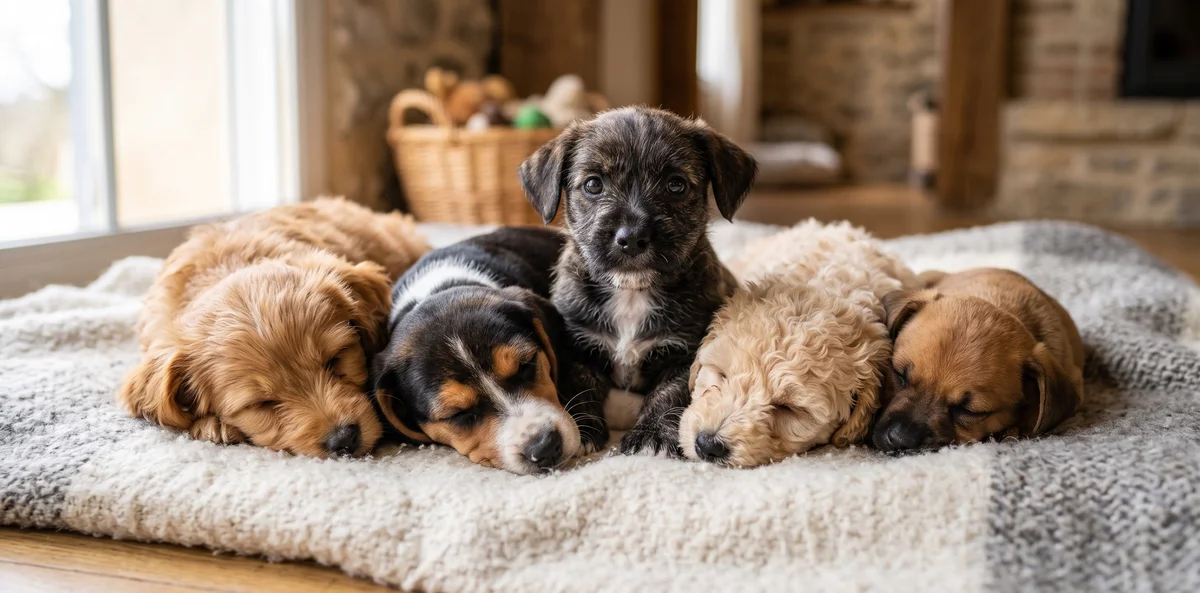
Two brothers from the same litter can show very different temperaments. One bold, the other shy. That variety gives dog breeding its real depth. Locking in a type takes patience and several generations of selection.
That is exactly the path we explore in our article on creating your own dog breed. So yes, prediction has its limits. Yet it turns pure chance into probabilities, and gives enthusiasts a clear direction to follow.
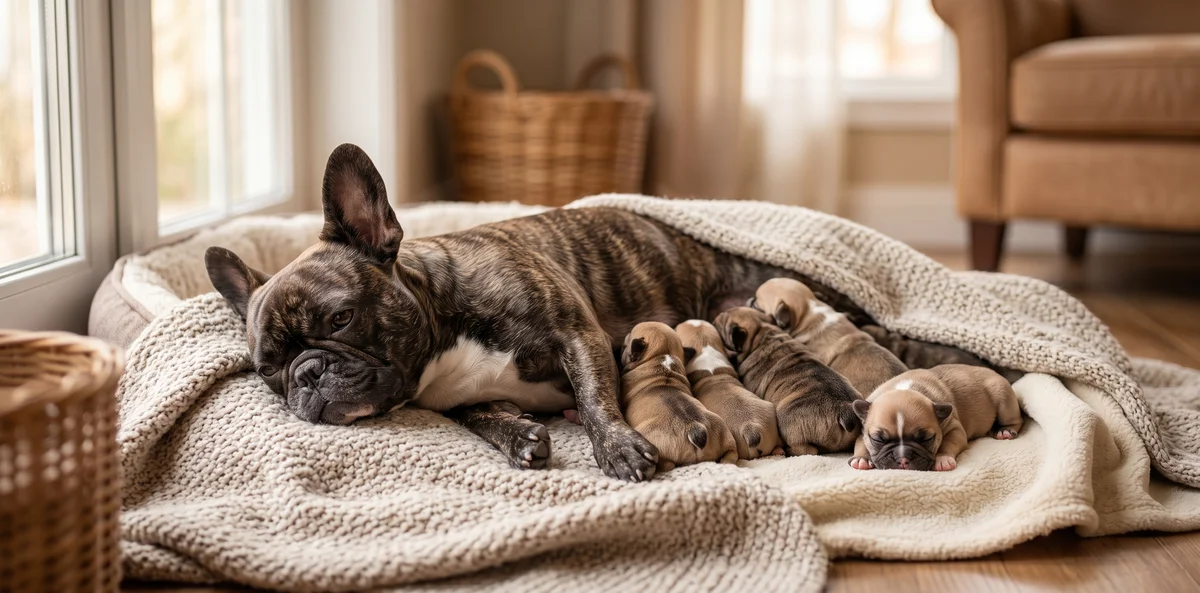
Predicting a Puppy's Looks
A puppy's future build fascinates every future owner. Good news: much of it already shows the moment you choose the parents. Size, coat, and overall shape follow clear rules. Let's look at what genetics can truly help you anticipate.
• Size, Build, and Body Type
Adult size ranks among the most predictable traits. It mostly depends on the growth genes passed down by sire and dam. Two parents of medium size rarely produce a giant. Check the earlier generations too, since a large ancestor can resurface. Some breeds even come in several official formats.
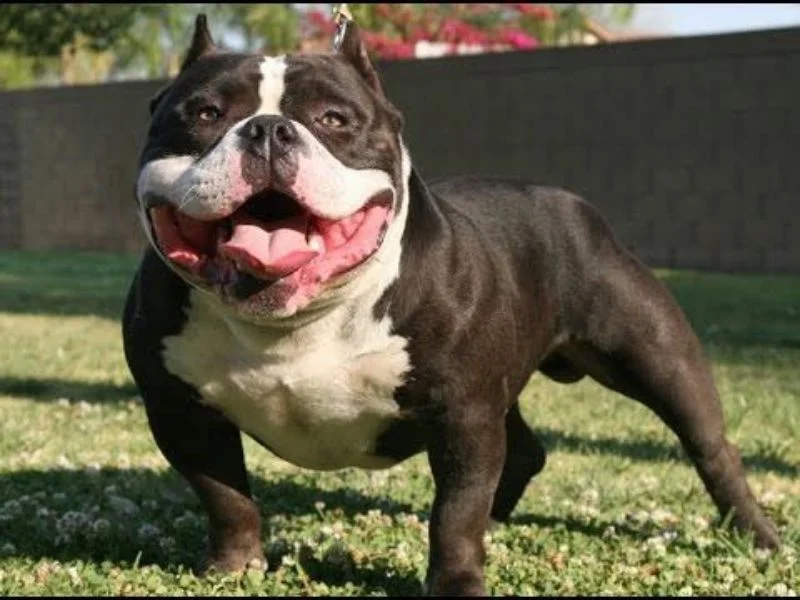
The American Bully shows this well, with its variants laid out on our American Bully breed page.
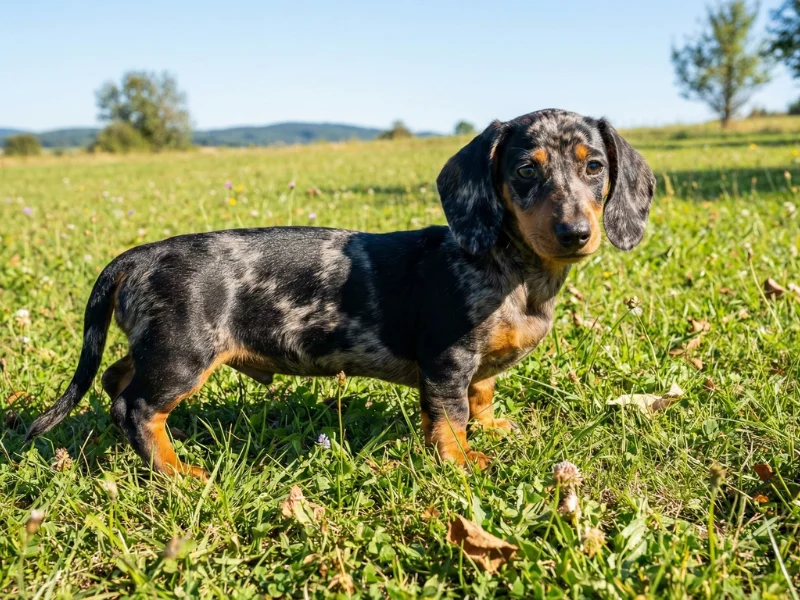
Weight follows the same logic, with a margin tied to diet and health. Body type reveals itself earlier than many expect: bone structure, leg length, overall carriage. The Dachshund captures these size gaps nicely, as our Dachshund breed page shows. A sharp breeder already reads a lot during the first few weeks.
• Coat Color and Texture
This is the most studied area. Coat color answers to several genes, spread across specific spots called loci. Some set black or brown, others dilute the shade or add patches. Breeders can therefore estimate the likely coats of a litter with strong reliability.
Texture follows genetics too: smooth, wiry, curly, or long. Keep in mind, though, that the exact shade stays polygenic. Two golden parents produce lighter or darker pups across a real range.
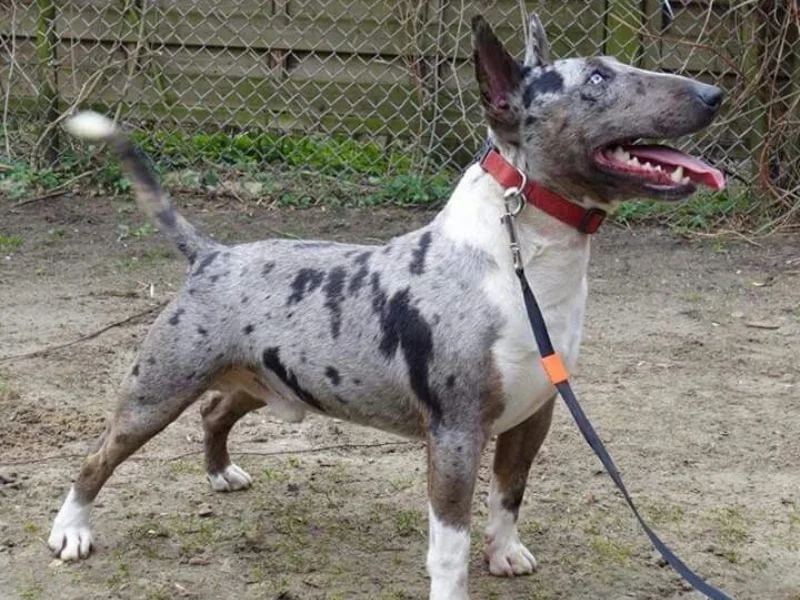
Some puppies even shift color as they grow. One safety note: crossing two merle dogs risks serious health issues. Responsible breeders always avoid that pairing.
• The Traits Hardest to Foresee
Not everything shows up on a genetic chart. Head shape, muzzle length, and ear set keep changing as the pup grows. These details often settle after several months. The role of the environment matters a lot too.
Diet, activity, and health shape the final silhouette.
Two puppies with the same inheritance can still look slightly different once grown. Crosses between breeds add even more uncertainty, since the genes blend in a less predictable way. This is where genetics shows its honest limits. It highlights trends, without ever promising an exact result. And that touch of mystery gives every new litter its charm.
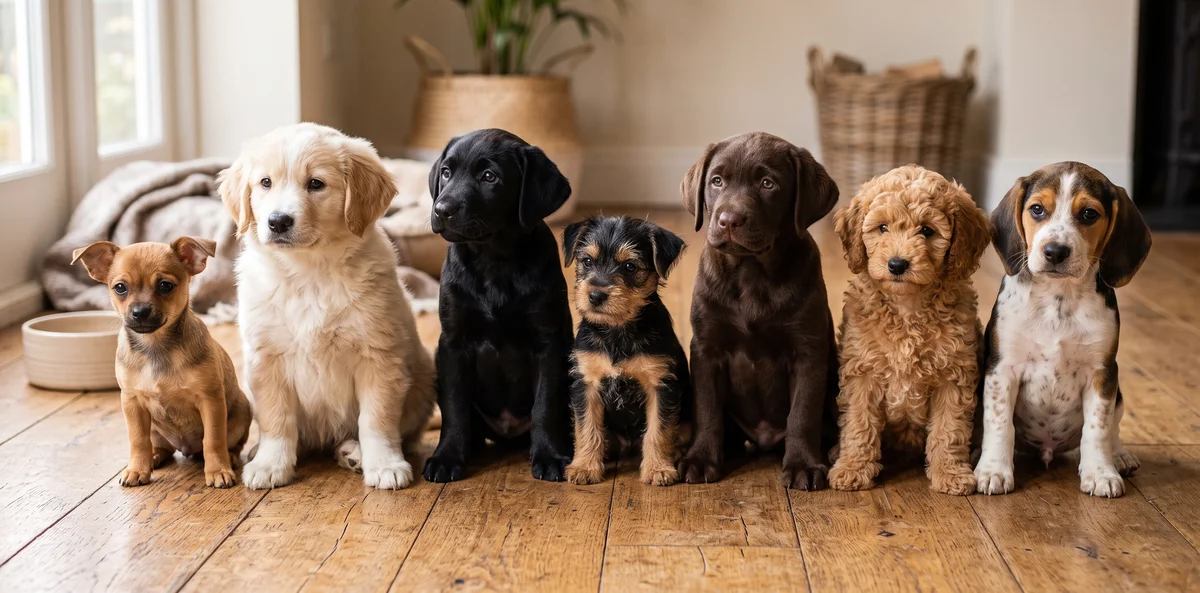
Anticipating Temperament
A puppy's personality weighs as much as its looks in a happy adoption. Good news: genetics offers real clues. Yet upbringing and the first weeks of life play a huge role. Let's break down what truly takes shape.
• What Personality Really Passes Down
The studies are firm. Temperament passes down in part, but never in a simple way. Many genes come into play, which keeps every prediction cautious. Researchers describe a low to moderate heritability for most behaviors.
In practice, a calm parent raises the odds of settled pups. Sociability, curiosity, and a tendency toward fear follow the same logic. Keep in mind, though, that breed alone predicts individual personality poorly.
Two puppies from the same line can react very differently. Serious breeders therefore watch the real behavior of the parents, not just the pedigree. This detective work sharpens the pairings and steers toward the temperament a program aims for.
• Nature vs. Nurture
Here comes the big debate. Nature lays the foundation, experience builds the rest. A puppy arrives with predispositions, like a reactivity threshold or an energy level. Yet nothing is fixed at birth.
The environment then reshapes these bases. The same predisposition can yield a confident dog or a fearful one, depending on what the pup lives through.
Genes and surroundings work together, never one against the other. This interaction explains why two brothers take opposite paths. A shy puppy with good support gains assurance. A bold puppy left unguided can turn difficult. The takeaway stays upbeat: owners keep real room to act on the adult behavior.
• Why Socialization Matters
Science points to a key window. Between three and fourteen weeks, a puppy's brain stays wide open to the world. The people, sounds, and places met then leave a lasting mark on temperament.
A puppy gently exposed to varied situations often grows into a balanced adult.
On the flip side, a lack of stimulation during this window feeds fear and anxiety. Vets stress that exposure is not enough: it must stay positive. One rough experience can plant a stubborn fear. Breeders play a leading role here, since this period starts before adoption. Done well, this early work builds confidence for the dog's whole life.
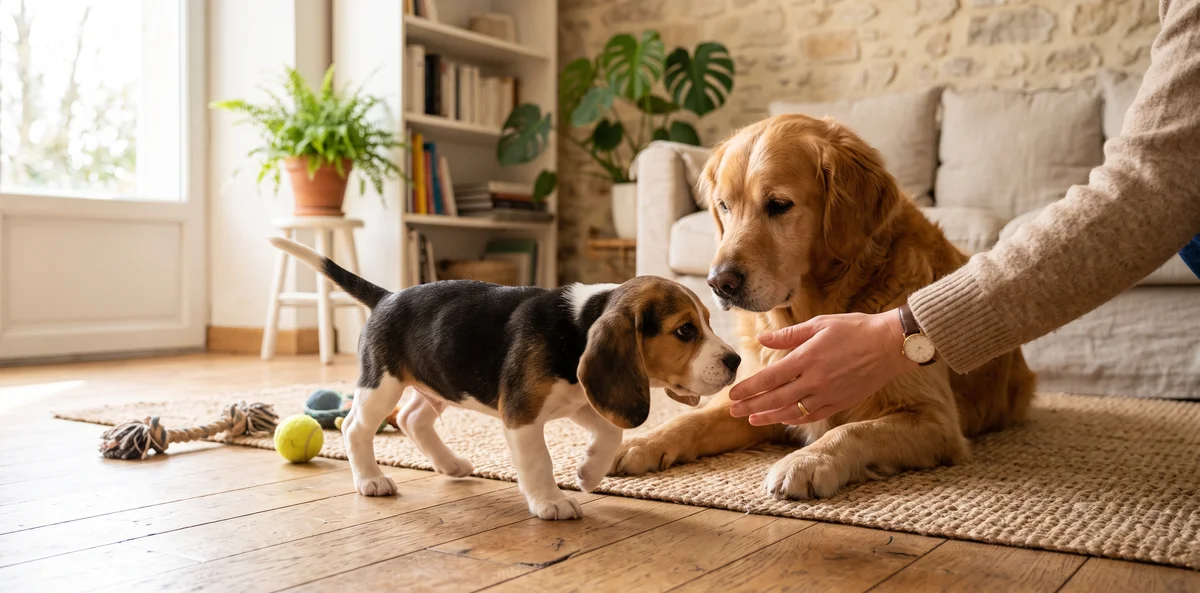
Tools to Help You Predict
Prediction has nothing to do with magic. It rests on concrete tools, within every breeder's reach. Pedigree, cross simulator, health tests: each one brings useful answers. Here is how to combine them for safer choices.
• Reading the Parents' Pedigrees
It all starts with the pedigree. This document maps the ancestors across several generations. It reveals the colors, the sizes, and sometimes the temperaments present in the line. A breeder who reads a pedigree well already anticipates many traits.
The pedigree also flags inbreeding risks. Crossing two close relatives concentrates the good genes, but also the bad ones. A rate that runs too high weakens the health of the litter. Serious registries therefore calculate a precise coefficient for each project.
Studying the ancestors across five generations already gives a solid view. This careful reading stays the first step of any thoughtful cross. It turns a hunch into a documented decision.
• Simulating a Cross with GenoLab
Now for the practical side. A cross simulator changes the game. It combines the data of both parents and projects the likely outcomes. Our tool GenoLab, available from your FBKC account, shows this approach at its best.
GenoLab calculates the inbreeding coefficient, displays the family tree, and estimates the offspring of a union. In a few clicks, a breeder tests several scenarios before the mating. They compare the lines, spot duplicate ancestors, and adjust the choice.
This kind of simulation does not replace experience, but it strengthens it. It turns raw data into a clear picture. The result: pairings that are better planned, healthier, and closer to the goal.
• Genetic and Health Testing
DNA tests round out the picture. They detect color genes, but also hereditary diseases. Screening prevents pairing two healthy carriers of the same defect. The litter then gains real soundness.
These analyses guide more responsible pairings. They also confirm the likely coats, with more reliability than the eye alone. Yet health goes beyond genes.
Good food, movement, and rest count just as much. Our page on dog well being details these core needs. A breeder who combines testing, simulation, and daily care stacks the odds in their favor. Prediction then becomes a true breeding project.

The Limits of Prediction
Genetics reveals a lot, yet it promises nothing. Every litter keeps its share of mystery. Grasping these limits prevents letdowns and makes projects more honest. Here is what still slips past a breeder's control.
• The Element of Chance
Let's start with a simple truth. Reproduction stays a roll of the dice. Each parent passes on a unique combination of genes, never the same one twice. Even with precise data, a surprise can always show up in the litter.
This element of chance touches both body and temperament. A forgotten color resurfaces, an unexpected character emerges. Polygenic traits amplify this effect, since dozens of genes combine at once. Prediction therefore delivers probabilities, not certainties.
A clear-eyed breeder accepts this reality and speaks openly with future adopters. That honesty builds trust. And far from discouraging anyone, this touch of the unexpected gives every new birth its beauty.
• Common Breeder Mistakes
Here is where projects go off track. The first error is trusting the parents' looks alone. Two handsome dogs do not guarantee a fine litter. Hidden genes often hold surprises in store.
Another common trap: neglecting behavior in favor of appearance.
A gorgeous but anxious dog passes on its weaknesses too. Some breeders also ignore the inbreeding coefficient, risking a buildup of defects. Rushing hurts just as much. Choosing a cross on a whim, without studying the lines, often ends in failure.
The right method asks for time, tools, and a critical eye. Cross-checking your sources stays the best way to avoid these repeated missteps.
• Choosing the Right Pairing
Let's finish with something practical. A good cross always starts from a clear goal. Do you want to set a color, improve a temperament, strengthen health? The answer shapes the rest of the project.
Next, combine the approaches: pedigree, simulation, and health tests move hand in hand.
Defining the purpose of a cross deserves real thought too, a topic we explore in our article on mixing dog breeds.
Take the time to watch the parents in person, not just on paper. A patient, curious breeder gets litters that are more predictable and healthier. Prediction then becomes a tool that serves animal welfare.
Conclusion
So, can you predict a puppy's looks and temperament? In part, yes. Genetics offers reliable trends for color, size, and some behaviors. But every litter keeps its surprise, and that is a good thing.
The real key comes down to three words: observe, test, anticipate. A pedigree read with care, a serious simulation, and health tests turn chance into managed probabilities. Breeders gain peace of mind, future adopters gain confidence. Predicting does not mean controlling everything. It means making informed choices, for the sake of healthier puppies, better prepared for their new life.
Frequently asked questions
Mostly, yes. Coat color follows several known genes. By studying the parents' colors and their hidden carriers, a breeder estimates the likely shades of a litter with strong reliability. The exact tone still keeps a bit of surprise.
Largely. It depends on the growth genes passed down by both parents. Two dogs of medium size rarely produce a giant. Looking at the earlier generations sharpens the forecast of the adult format even further.
In part. Temperament passes down, but its heritability stays low to moderate. Breed alone predicts individual personality poorly. Upbringing and socialization, from the first weeks, weigh as much as genes on adult behavior.
Combine three tools: pedigree study, a simulator like GenoLab, and DNA tests. Together they project color, size, and health risks. This method turns chance into reliable probabilities, well before the mating.
Yes, often. Each puppy gets a unique combination of genes, drawn at random at conception. Two brothers can show a very different coat and temperament. That variety gives dog breeding its real depth.
Breeds mentioned in this article