


Dog Pedigree: How to Look It Up and Verify It
Checking a dog's pedigree takes just a few minutes, as long as you know where to look, what to read, and which small details give away a fake set of dog papers.
The stakes are real: fake papers cost buyers dearly and erase a dog's true background.
Registries, QR codes, microchips, bloodlines: here's how to look up a dog's pedigree, read it the right way, and catch a fraud before you sign.
What a Pedigree Actually Shows
Before you check a pedigree, you need to know what belongs on it. A genuine pedigree always follows the same logic: an identity, a bloodline, and a registry behind it. If any of those pieces is missing, ask questions. Here's what you should find, line by line.
• The Family Tree
Open the document. The first thing you'll notice is the family tree.
It starts with your dog and traces the bloodline back, generation by generation: the sire's side on top, the dam's side below.
On an FBKC pedigree, the tree fills the second page. It covers four generations, or 30 ancestors. Each box shows the dog's name, registration number, and color.
Why look closely? A complete tree lets you spot the same ancestor on both sides, which is the starting point for any inbreeding calculation.
Empty boxes don't automatically mean fraud. They do deserve a clear explanation from the breeder. Ask to see both parents' pedigrees too: they should match the puppy's. A reputable breeder will show them without hesitation, often before you even ask.
• Registration Number and Microchip
Next checkpoint: your dog's identity. The pedigree shows its registration number with the registry that issued it.
That number is unique. It links the paper to a record in the registry's database. It's the number you'll use for any verification.
Right next to it, you'll find the microchip number. Most modern chips use a 15 digit international code. The first three digits are either a country code, like 826 for the UK, or a manufacturer code starting with 9, which you'll often see in the US. Your vet can read it in seconds with a scanner. That code stays with your dog for life, whoever the owner is.
If that number doesn't match the one in the health record, stop right there.
The rest of the page fills in the picture: name, sex, breed, color, date and country of birth, and breeder. On an FBKC pedigree, all of these appear on the first page, along with the owner and the certification date.
• What a Pedigree Doesn't Guarantee
A pedigree proves one thing: your dog's ancestry, as the registry recorded it.
It doesn't guarantee good health. A dog with a complete family tree can still carry an inherited disease. Only veterinary or DNA tests can tell you that. Ask the breeder for both parents' test results, and check the dates.
It doesn't guarantee temperament or a responsible breeder either. You check those in person: how the dogs live, how the mother behaves, what vet care they get.
Finally, a pedigree is only as solid as the registry behind it. A trustworthy document points to an identifiable organization, with a database you can actually check.
To see what these papers really mean for your dog, read our article on what your dog really loses without a pedigree.
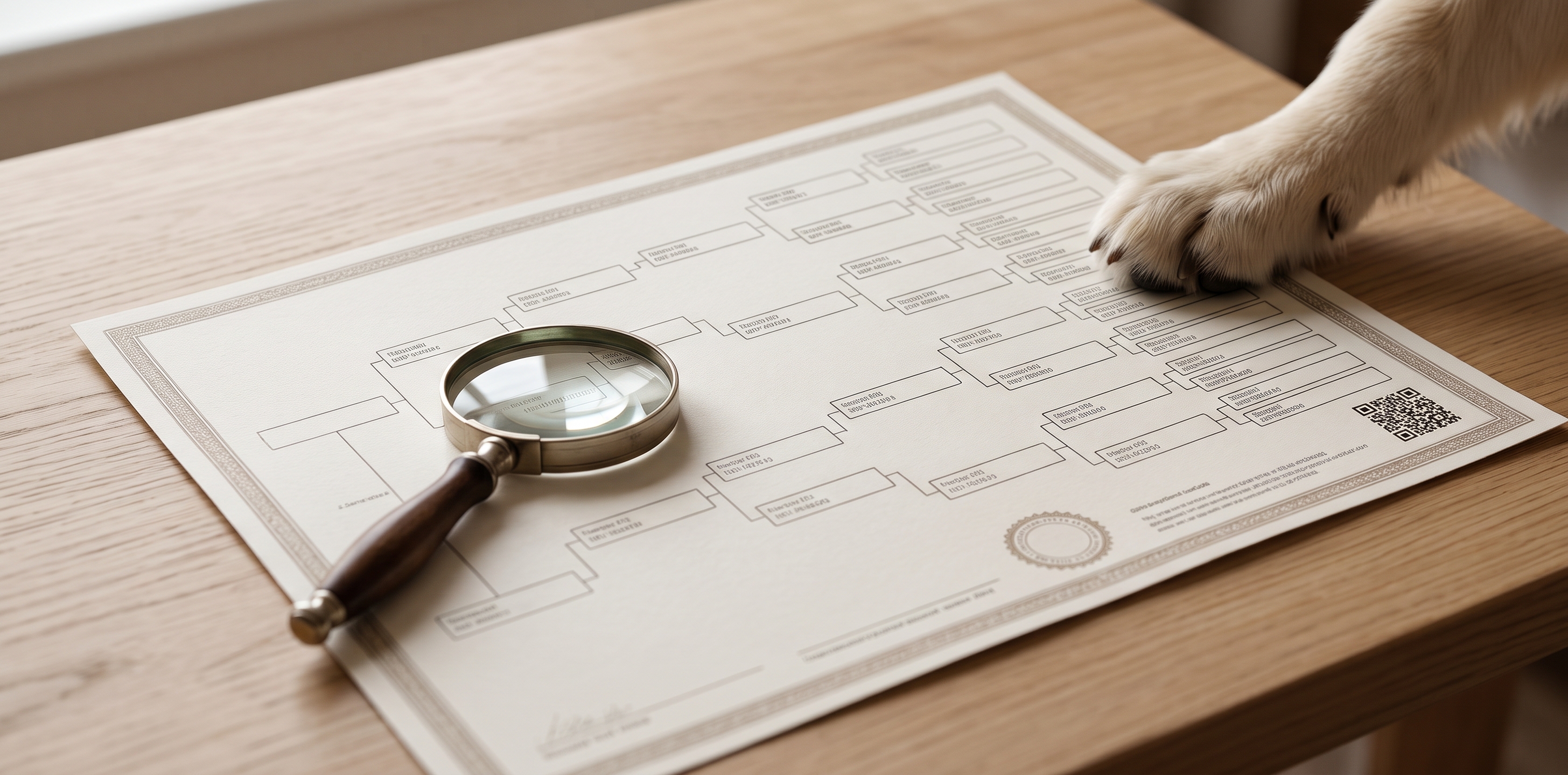
Where to Look Up a Dog's Pedigree
A paper pedigree isn't enough on its own. To check it, you have to go back to the source: the registry that issued it. The good news is that it rarely takes more than a few minutes. Here are three habits worth building, from the most reliable to the simplest.
• Through the Issuing Registry
First step: identify the organization that issued the document. Its name and logo appear on the pedigree.
Every registry keeps a database of its registered dogs. That database is the real reference, not the paper in your hands. Paper can be copied or edited. A database can't.
With the registration number, you can query that database, online or simply by asking. The registry then confirms the dog exists, with the same identity and the same parents.
A registry you can't find, with no website or contact details, is a red flag. A legitimate registry answers buyers' questions, and quickly. It gives you a real address and a real person to talk to.
At FBKC, just send us the dog's FBKC number through our contact page. Our team checks the record in the registry and gets back to you.
• The FBKC Pedigree QR Code
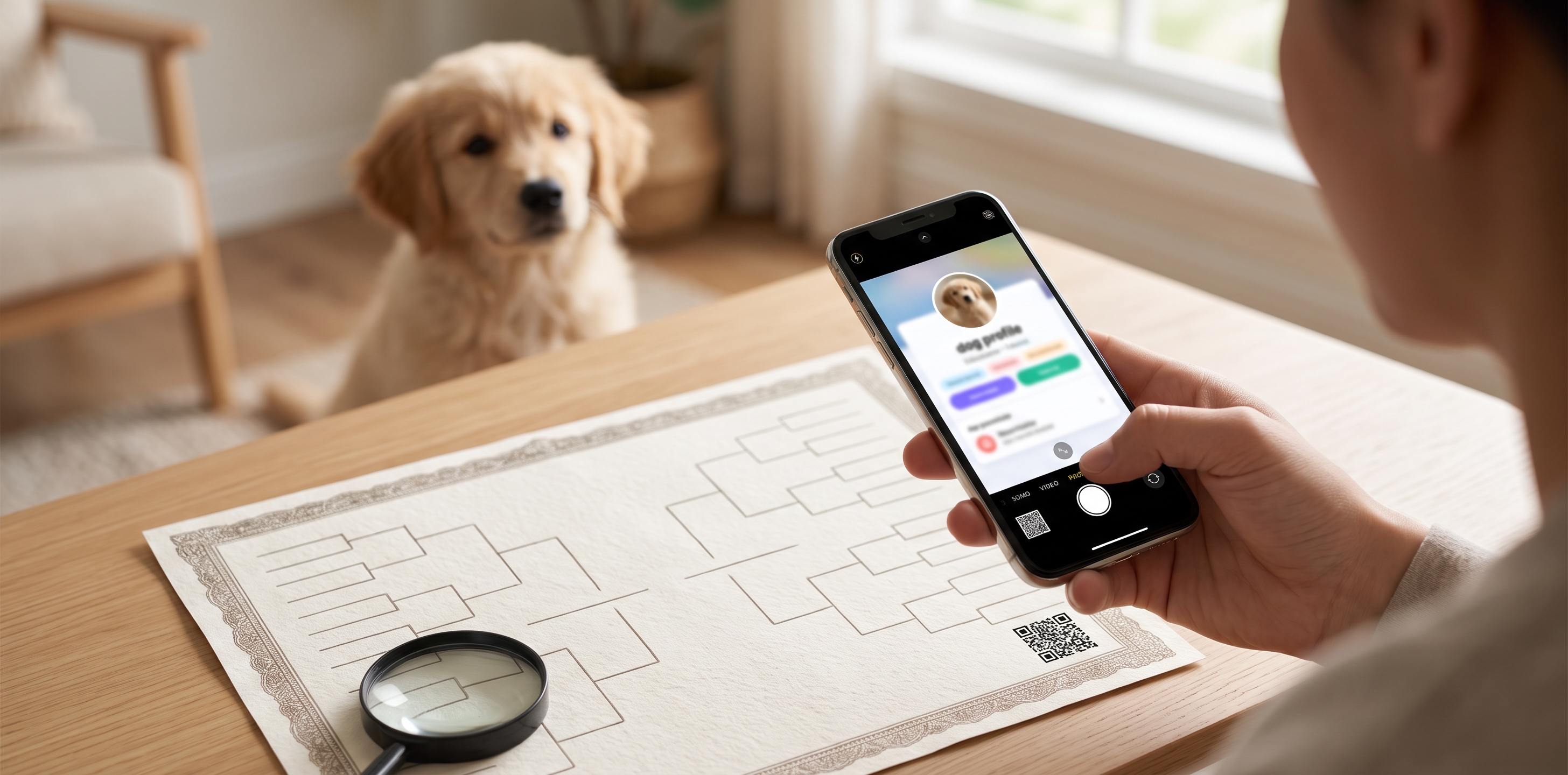
With an FBKC pedigree, verification fits in your pocket. The document carries a printed QR code.
Scan it with your phone's camera. It takes you straight to the dog's page on fbkcdogs.com.
That page lists the dog's identity: breed, color, date of birth, microchip, and FBKC number. It also shows the family tree, often with photos of the ancestors, plus any known siblings.
Compare every line with the paper. Even a small mismatch is worth questioning. A different birth date, another color, a microchip number that doesn't line up: write it down and ask for an explanation.
Two practical notes. The page opens once you're signed in to an FBKC account. And it only exists for dogs our team has approved, which makes it solid proof.
• What the Breeder Should Show You
Third source: the breeder. Before you sign anything, they should show you the original pedigree, not a photo or a blurry copy.
Ask for the sire's and dam's pedigrees too. They should name the same registry and carry numbers that match the puppy's family tree. Make sure their names sit right at the top of that tree.
Then check out the kennel itself. A registered breeder usually has a website showing their dogs and litters. The litter dates they list should fit your puppy's age.
If the breeder has an FBKC Pro page, you'll find it in our FBKC kennel directory. Each page introduces the kennel, its dogs, and its litters.
A breeder who won't show you the paperwork has already given you an answer. Take your time and look elsewhere.
How to Read a Pedigree Correctly
A pedigree follows a simple logic. Once you get it, every box tells you something: where your dog comes from, what it can pass on, and whether its parents were closely related. Three quick reads are all it takes.
• Sire Line and Dam Line
Start by finding the two branches. On top is the sire line: the father, then his parents, and so on. Below is the dam line, built the same way.
Each generation doubles the number of boxes. Two parents, then four, then eight, then sixteen: over four generations, that's 30 ancestors.
Read from left to right. The further right you go, the further back in time you travel. The last column holds the sixteen oldest ancestors.
Here's a tip: note any names that come up more than once. The same dog can appear several times, on one side or on both. That detail matters, and the third read will show you why.
Finally, check the sire's and dam's registration numbers. They should match their own pedigrees exactly. A single mismatch is enough to call the whole tree into question.
• Titles, Colors, and Health Tests
Depending on the registry, some boxes carry abbreviations before the dog's name. These are usually titles earned in the show ring or in working trials.
A title rewards one specific dog. It isn't inherited. A champion four generations back contributes, on average, about one sixteenth of the puppy's genes. No more.
Color, on the other hand, appears in every box of an FBKC pedigree. It helps you understand your puppy's coat, and what it may pass on later.
Health tests rarely appear on a pedigree. Ask for the results separately: hip dysplasia screening, breed specific DNA tests. A reputable breeder keeps them on file and shows them to you. Check the date on each test, too.
Keep one simple rule in mind: a pedigree describes a bloodline, and tests describe health.
• Spotting Inbreeding
The last read: inbreeding. It shows up when the same ancestor appears on both the sire's side and the dam's side.
Geneticists measure it with the COI, the coefficient of inbreeding. A few benchmarks: 25% for a brother and sister mating, 12.5% for two dogs sharing one parent, 6.25% for first cousins.
They recommend staying under 10%, and ideally below the breed average.
Keep one limit in mind. A calculation based on four generations comes out lower than reality, because it ignores more distant ancestors.
Before a mating, the GenoLab tool in your FBKC account calculates this coefficient from the sire's and dam's pedigrees. To dig deeper, read our investigation into dog inbreeding and the COI.

How to Spot a Fake Pedigree
Pedigree fraud is real, and it mostly targets buyers in a hurry. Forged documents, papers that never arrive, a registration number borrowed from another dog: the methods vary, but the warning signs look alike. Here's how to spot them before you pay.
• Red Flags to Watch For
The first and most common red flag: papers promised for later. "The pedigree will arrive in a few weeks." Sometimes true, often not. Get a date and the registry's name in writing.
Second red flag: a poor quality document. A photocopy, spelling mistakes, a blurry logo, no certification date.
Third red flag: a registry nobody has heard of. Search its name online. No website, no address, no phone number? That paper is probably worthless.
Fourth red flag: dates that don't add up. A dam only a few months old when the litter was born, a puppy older than the breeder claims, a sire born after his own offspring.
Last red flag: pressure. "Three other families are interested, you need to decide tonight." A reputable breeder always gives you time to check.
• Matching Chip, Papers, and Registry
A fake rarely survives a cross check. The idea is simple: compare three sources that don't depend on each other.
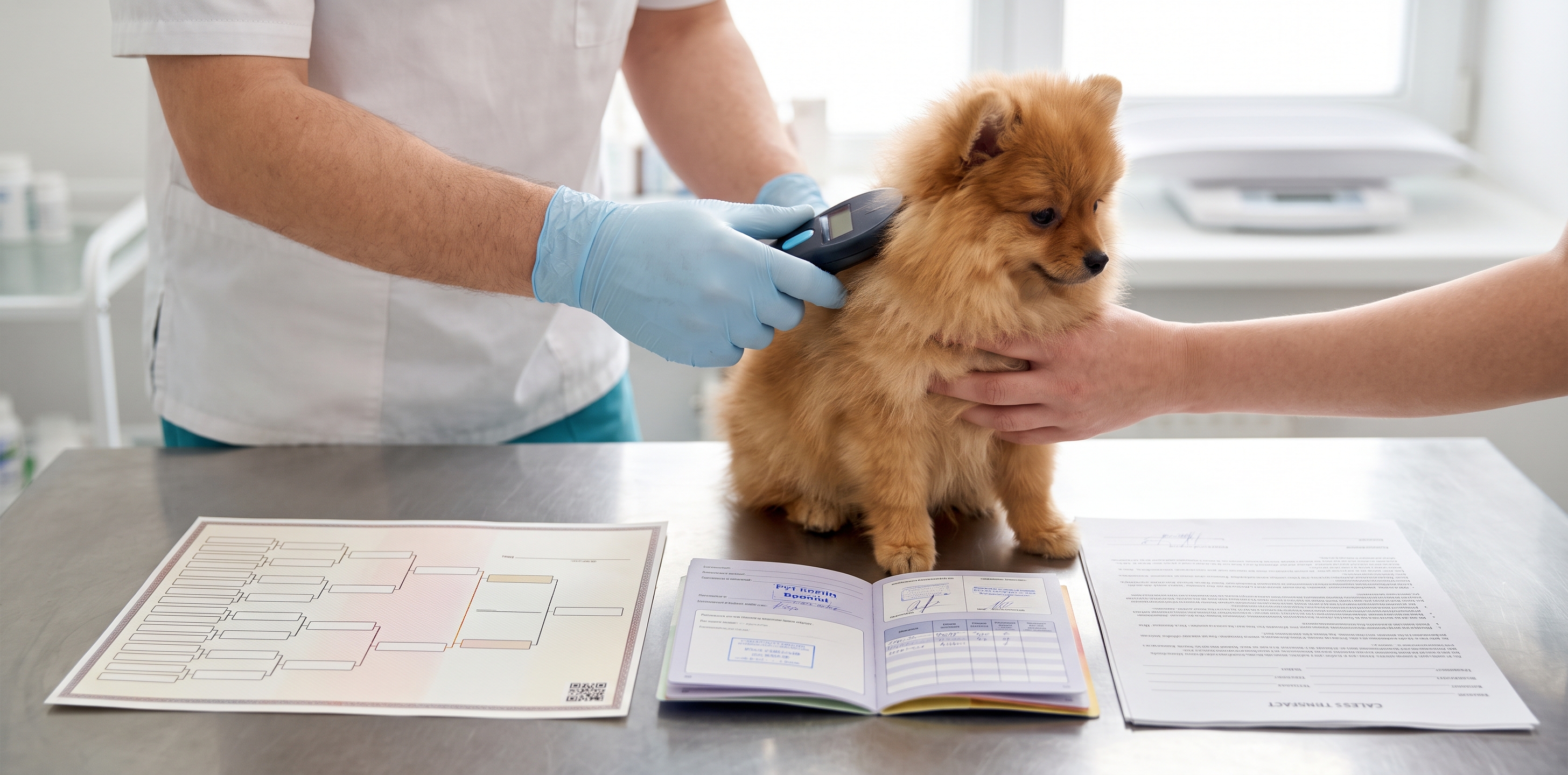
Start with the microchip. In the UK, a puppy must be microchipped and registered by 8 weeks of age, before it's sold. In the US, rules vary by state, and most states that regulate puppy sales set the minimum age at 8 weeks. Ask your vet to scan the chip. The number should match the one on the pedigree.
Next, the paperwork: pedigree, health record, vet certificate, sales contract. The name, date of birth, and color should match everywhere.
Finally, the registry. Look up the registration number in its database, or scan the QR code on an FBKC pedigree.
If all three sources tell the same story, you can move forward with confidence. If even one doesn't, put the purchase on hold until you get an explanation.
To find a puppy from registered breeders, browse our puppies for sale listings.
After You Bring Your Dog Home
Your puppy is home and the paperwork checks out. Two steps remain, and many owners forget them: putting the pedigree in your name, and keeping your dog's family tree alive. Neither takes long, and both pay off for years.
• Getting the Pedigree in Your Name
A pedigree names an owner. After the sale, that name should be yours. Depending on what the breeder gave you, there are two possible situations.
First situation: you received a temporary coupon with a puppy code. That code lets you request the final pedigree, the official document.
In your FBKC account, enter the code, complete your puppy's profile with photos, and pay the registration fee. The final pedigree is then issued in your name.
Second situation: the dog already has a pedigree, but it's in the breeder's name or a previous owner's name. In that case, you need to file an ownership claim.
In your My Dogs area, enter the dog's FBKC number and the date of sale. The current owner receives your request, then accepts or declines it. If it's declined, you can submit it again once, after seven days.
• Keeping Your Dog's Family Tree Alive
A paper pedigree never changes. In your FBKC account, your dog's family tree keeps growing over time.
The DoggyPix tool displays the tree with a photo of each ancestor. You can add and crop photos of your own dogs in just a few clicks.
Does an ancestor belong to another member? One button sends a photo request to its owner. The tree fills in, one box at a time.
You can then export this illustrated pedigree as a PDF, covering two, three, or four generations. It's handy for showing off your dog, sharing its lineage with family, or keeping a record of its roots.
And if your dog becomes a stud or a brood bitch one day, that complete tree will make choosing a mate much easier.
Open your My Dogs area and launch DoggyPix from your dog's page.

Frequently asked questions
Identify the registry that issued the document, then search its database using the registration number.
On an FBKC pedigree, just scan the QR code: it opens the dog's page with its identity and family tree. Then compare every line with the paper the breeder gave you.
Watch for red flags: papers promised for later, a poor quality photocopy, a registry you can't find, dates that don't add up.
Then cross check three sources: the microchip scanned by a vet, the puppy's paperwork, and the registry's database. If even one doesn't match, hold off.
A pedigree shows the dog's identity: name, breed, sex, color, date of birth, microchip number, and registration number.
It also includes the family tree. On an FBKC pedigree, that tree covers four generations, or 30 ancestors, each with a registration number and color.
No. A pedigree proves a dog's ancestry, not its health. A dog with a complete family tree can still carry an inherited disease.
Ask the breeder for the veterinary and DNA test results for both parents, and check the date on each one before you commit.
With a temporary coupon, enter the puppy code in your FBKC account to get the final pedigree issued in your name.
If the dog already has a pedigree in the breeder's or a previous owner's name, file an ownership claim from your My Dogs area.
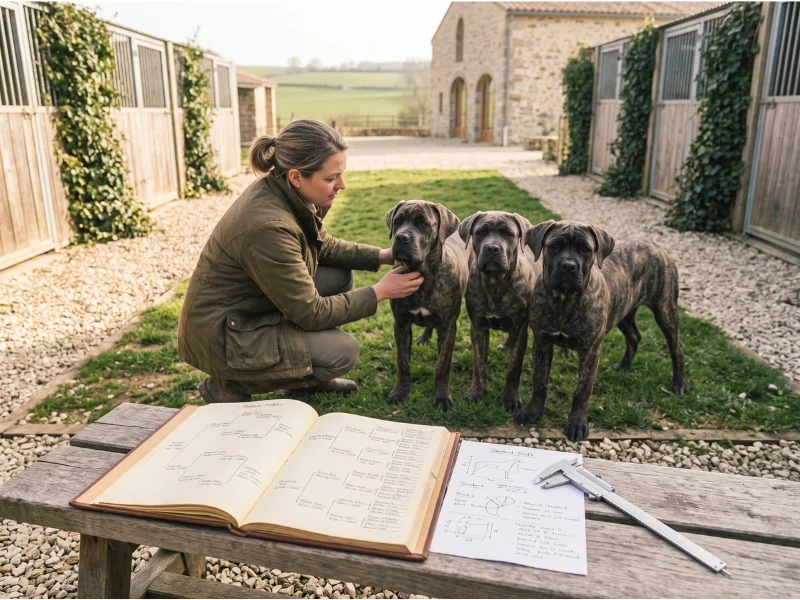

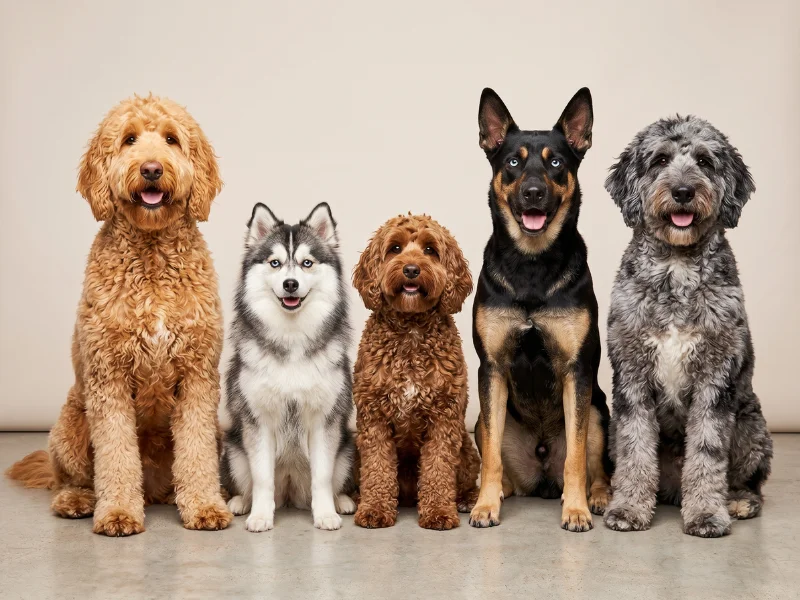
Breeds mentioned in this article